
LTX-2 simplifies high-quality video production. It’s an open-source AI model that generates 4K videos with synchronized audio, saving time and cutting costs. Businesses can create professional-grade content without expensive equipment or lengthy workflows.
Key Highlights:
- 4K resolution with up to 50 fps for sharp visuals.
- Audio-video synchronization eliminates post-production fixes.
- Three performance modes to balance speed, quality, and cost.
- Fast: Quick previews ($0.04/second).
- Pro: Standard production ($0.08/second).
- Ultra: High-end projects ($0.16/second).
- Integration with tools like Adobe Premiere Pro for easy editing.
Why It Matters:
- Reduces production costs by replacing traditional filming needs.
- Speeds up timelines with automated workflows.
- Enables small businesses to compete with polished content.
While it has hardware demands and minor limitations like inconsistent multi-scene visuals, LTX-2 is reshaping video production by making it faster, cheaper, and more accessible.
Your dream AI video generator is here! 4K, open source, with sound, & long duration
Key Features and Technical Capabilities of LTX-2
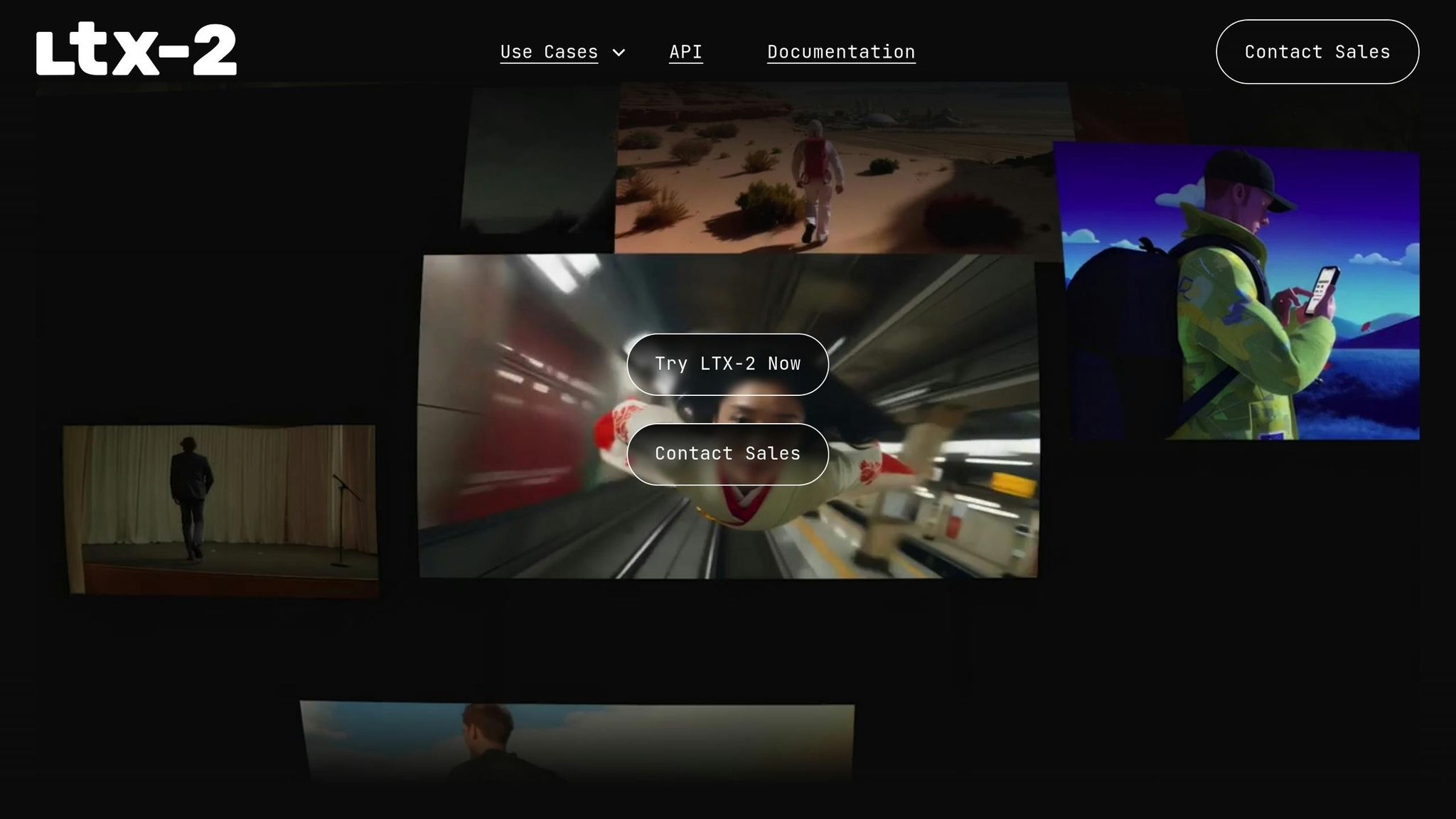
LTX-2 brings a fresh approach to video production, combining advanced technology with a streamlined workflow. By integrating visual and audio elements simultaneously, it not only boosts production quality but also speeds up the creative process, making it a standout tool in its category.
Native 4K Resolution and High Frame Rates
With support for 4K resolution (3,840 x 2,160) and frame rates of up to 50 fps, LTX-2 ensures crystal-clear visuals and professional-grade output.
Synchronized Audio-Video and Lip Sync
One of the standout features of LTX-2 is its ability to seamlessly synchronize audio and visuals. By processing text, images, and audio in a single pass, it ensures that every sound effect and visual cue aligns perfectly. For example, sound effects like a door slam or the sound of heavy rain are automatically timed to match the action on screen. Even lip synchronization is handled with precision, ensuring dialogue matches the visuals frame by frame.
"The synchronized audio feature is a game-changer. We can create product demos with perfect timing and professional quality in minutes instead of hours."
- Marcus Rodriguez, Marketing Manager, TechFlow
This level of integration eliminates the need for extensive post-production edits, saving time and reducing the likelihood of reshoots. The result? Polished, ready-to-use content that businesses can quickly put into action. To cater to different production needs, LTX-2 also offers a range of performance modes.
Performance Modes for Different Needs
LTX-2 includes three customizable performance modes, allowing users to strike the right balance between speed, quality, and cost based on their project requirements:
| Performance Mode | Purpose | Key Features | Cost per Second | Hardware Needs |
|---|---|---|---|---|
| Fast | Quick previews and concept testing | Rapid processing with mobile-friendly workflows | $0.04 | Consumer-grade GPUs |
| Pro | Everyday content creation | Balanced speed and quality for review-ready output | $0.08 | Consumer-grade GPUs |
| Ultra | High-end cinematic projects | Native 4K at 50 fps, full audio sync, 10-second sequences | $0.16 | High-end or multi-GPU setups |
The Fast mode is perfect for brainstorming ideas and testing concepts quickly. Pro mode strikes a balance, making it suitable for marketing content and daily production needs. For projects requiring the highest quality, the Ultra mode delivers cinematic results with flawless visuals and synchronized audio, though it demands more powerful hardware.
Pricing is flexible, depending on the chosen resolution (from 720p to 4K) and whether synchronized audio is included. This adaptability allows businesses to manage costs effectively while meeting their production goals.
How LTX-2 Changes Video Production Workflows
Traditional video production often involves juggling multiple moving parts – coordinating teams, renting expensive equipment, and navigating lengthy post-production processes. LTX-2 flips the script by streamlining the entire workflow into one AI-driven system that handles both visual creation and audio synchronization automatically.
Cost and Time Savings
Producing videos the old-fashioned way can be a logistical and financial headache. You need actors, studios, equipment, and a sizable crew, all of which drive up costs and stretch timelines. LTX-2 changes the game by using AI to generate high-quality content, slashing expenses and speeding up production. Forget about common setbacks like weather delays, scheduling conflicts, or equipment failures – this system eliminates those hurdles, allowing businesses to iterate quickly and adapt campaigns on the fly. The result? Lower costs and more room to take creative risks.
More Creative Freedom for Businesses
With fewer financial and logistical barriers, LTX-2 opens the door to bold new creative possibilities. Businesses can explore ambitious ideas without worrying about constraints like budget, location, or talent availability. The system also makes it easier to test different approaches – marketing teams can quickly create and compare multiple versions of a campaign through A/B testing. This flexibility levels the playing field, letting smaller businesses produce polished, professional videos that compete with those from larger companies.
Integration with Professional Tools
LTX-2 is designed to fit right into existing workflows. Its open-source design ensures compatibility with industry-standard editing tools like Adobe Premiere Pro, Final Cut Pro, and DaVinci Resolve. Editors can seamlessly integrate AI-generated footage into their projects, adding finishing touches like color grading or custom graphics. Plus, the system generates content in various resolutions and frame rates, meeting the needs of everything from high-end advertising spots to social media posts. Automated features like perfectly synced audio and video further simplify post-production, freeing up editors to focus on creative details and aligning the final product with the brand’s vision.
sbb-itb-0df1f49
Practical Applications and Industry Use Cases
LTX-2 is transforming how industries like marketing and education approach 4K video production. Its ability to produce high-quality videos quickly and at a fraction of the traditional cost makes it a game-changer for organizations that need content on a large scale. Let’s explore how different sectors are putting this technology to work.
Advertising and Marketing Campaigns
Marketing teams are turning to LTX-2 to create promotional videos that would usually demand hefty budgets and long timelines. Whether it’s product demos, brand storytelling, or social media content, the model ensures a consistent, professional look across every platform.
Retailers, for instance, are using LTX-2 to produce seasonal campaign variations. This allows them to test creative ideas affordably across digital and mobile channels. Thanks to its 4K resolution, the content looks sharp and polished, whether it’s displayed on a massive digital billboard or a smartphone screen.
Another standout feature is its perfect synchronization between audio and video, making it a natural fit for commercials with voiceovers or music. This eliminates the usual headaches of post-production syncing, saving time and effort.
Educational and Training Content
Educational institutions and corporate training teams are also benefiting from LTX-2’s capabilities. Its dependable output makes it ideal for creating instructional materials, whether for employee training or academic purposes.
For corporations, LTX-2 simplifies the production of compliance training videos and onboarding materials. These resources can be updated easily as policies evolve, ensuring companies stay current without breaking the bank.
Universities and e-learning platforms are using the model to create visual explanations of complex ideas. For example, science and engineering programs can demonstrate intricate or risky processes that would be difficult or unsafe to film in real life. The 4K resolution ensures even the smallest details are clear, no matter the device being used. PyxelJam, a creative agency, has taken these educational possibilities to the next level with their use of LTX-2.
How PyxelJam Uses LTX-2

PyxelJam has adopted LTX-2 as a cornerstone of its video production process, crafting professional-grade promos, commercials, and educational videos without the need for traditional film crews, actors, or expensive equipment.
By using LTX-2, PyxelJam has streamlined its workflow, allowing the team to focus more on creative strategy and client collaboration while still delivering top-notch production quality. With the logistical challenges of traditional filming removed, the agency can explore ideas that would otherwise be too complex or costly to execute.
The open-source nature of LTX-2 is another major advantage. PyxelJam customizes workflows to meet specific client needs, whether it’s creating data-driven marketing campaigns or tailored training materials for corporate clients. This adaptability ensures they can serve a wide range of industries while maintaining a high standard of quality.
Additionally, PyxelJam has integrated LTX-2 into its AI voice agent services. The agency produces videos that showcase seamless, human-like interactions, helping businesses redefine their customer service capabilities. This combination of visual and audio solutions allows PyxelJam to offer a comprehensive, AI-driven approach to communication challenges.
Future Updates and Current Limitations
LTX-2 is paving the way for advancements in AI-driven video production, but it also comes with a few hurdles that users should be aware of.
Planned Features and Updates
Exciting updates are on the horizon for LTX-2. These will include extending the output duration, refining visual consistency across scenes, and making the platform more user-friendly. These updates aim to enhance the tool’s functionality, making production workflows smoother and opening up new creative opportunities. However, while these improvements are in development, it’s essential to understand the current limitations that may impact your projects.
Current Limitations
Despite its impressive performance and seamless integration with professional tools, LTX-2 does encounter some challenges. Maintaining a consistent visual style across multi-scene productions can be tricky, which may require additional manual adjustments. The platform also demands high-performance hardware to run effectively, making it less accessible for those with standard setups. Additionally, text rendering in videos can be hit-or-miss, posing challenges for projects that rely heavily on precise typography. Being aware of these constraints helps set realistic expectations and better plan your production process.
Conclusion: Why LTX-2 Changes Everything
With its advanced features and simplified workflows, LTX-2 is reshaping the landscape of video production. By offering native 4K resolution, precise audio-video synchronization, and open-source accessibility, it breaks down traditional barriers of cost and complexity, making high-quality production tools available to companies of all sizes.
The standout feature of high-frame-rate 4K output, combined with performance flexibility, means businesses now have access to cinema-quality video production without the hefty price tag. This levels the playing field, allowing smaller companies to produce visually stunning content and compete with larger players in the industry.
Instead of requiring businesses to completely overhaul their existing production setups, LTX-2 integrates seamlessly with current systems. It significantly reduces the time needed to bring video content to market and cuts production costs, freeing up resources for creative strategies and distribution efforts.
Take PyxelJam, for example. Their innovative use of LTX-2 showcases how this technology can revolutionize AI-powered video production. From commercials to educational videos and promotional content, LTX-2 enables the creation of visuals that were once too costly or technically impossible to achieve using conventional methods.
Of course, challenges like ensuring visual consistency and managing high hardware demands still exist. However, ongoing updates aim to address these issues, further enhancing performance and solidifying LTX-2’s role as a driver of progress in AI-powered production through community collaboration.
The true game-changer here isn’t just the technology itself – it’s how LTX-2 expands creative possibilities while making professional-grade video production accessible to businesses that couldn’t afford it before. With its blend of quality, affordability, and adaptability, LTX-2 is paving the way for a new era in AI-driven video creation.
FAQs
How does the LTX-2 model keep audio and video perfectly in sync without extra editing?
The LTX-2 model generates audio and video at the same time, seamlessly integrating motion, dialogue, background sounds, and music. This unified process ensures everything stays perfectly in sync, removing the need for extra adjustments during post-production.
By skipping the manual syncing step, LTX-2 streamlines video production, saving time and boosting efficiency. It’s a game-changer for both content creators and businesses looking to simplify their workflows.
What hardware do I need to run LTX-2 smoothly, especially in Ultra mode?
LTX-2 is designed to work seamlessly on most consumer-grade GPUs, making it a great option for a broad audience. That said, if you’re aiming to use Ultra mode – perfect for delivering top-tier fidelity in cinematic projects – you’ll need a more robust system.
For the best results in Ultra mode, a high-performance GPU with at least 12 GB of dedicated VRAM is recommended. This ensures the model can handle the extra computational load without sacrificing speed or quality. Pairing this with a fast processor and at least 16 GB of system memory will give you an even smoother experience.
What should I keep in mind when using LTX-2 for multi-scene video projects?
LTX-2 is capable of handling up to 20 seconds of continuous video in native 4K resolution, with frame rates reaching 50 fps. This makes it a great choice for creating short, high-quality video clips. However, it’s worth noting that support for longer durations and advanced ultra-high fidelity modes is still in progress.
It’s also important to mention that the native audio quality might not fully meet the demands of all production scenarios. Additionally, integrating LTX-2 into more complex, multi-scene workflows could require extra configuration due to the current state of its ecosystem. These areas are actively being worked on to improve the model’s overall capabilities and expand its applications in the future.