Product placement works because it integrates brands into stories people care about. Unlike ads, which interrupt, product placement blends into content, creating emotional connections with viewers. When brands appear naturally in scenes, they benefit from the positive emotions tied to the characters and narratives.
Key takeaways:
- Why it works: Emotional storytelling and psychological effects like familiarity and narrative immersion make placements memorable. For example, Ray-Ban sales surged 40% after Top Gun featured their sunglasses.
- Better than ads: Placements have higher recall rates (up to 81%) and can’t be skipped, unlike ads with an 86% skip rate.
- AI’s role: Tools like PyxelJam allow brands to insert or adjust placements in post-production, tailoring them to audience preferences and regional tastes.
- Measuring success: Metrics like brand recall, purchase intent, and sales lift show the long-term impact. AI helps track and refine these outcomes.
The Psychology of Product Placement
sbb-itb-0df1f49
Why Product Placement Outperforms Traditional Ads for Brand Loyalty
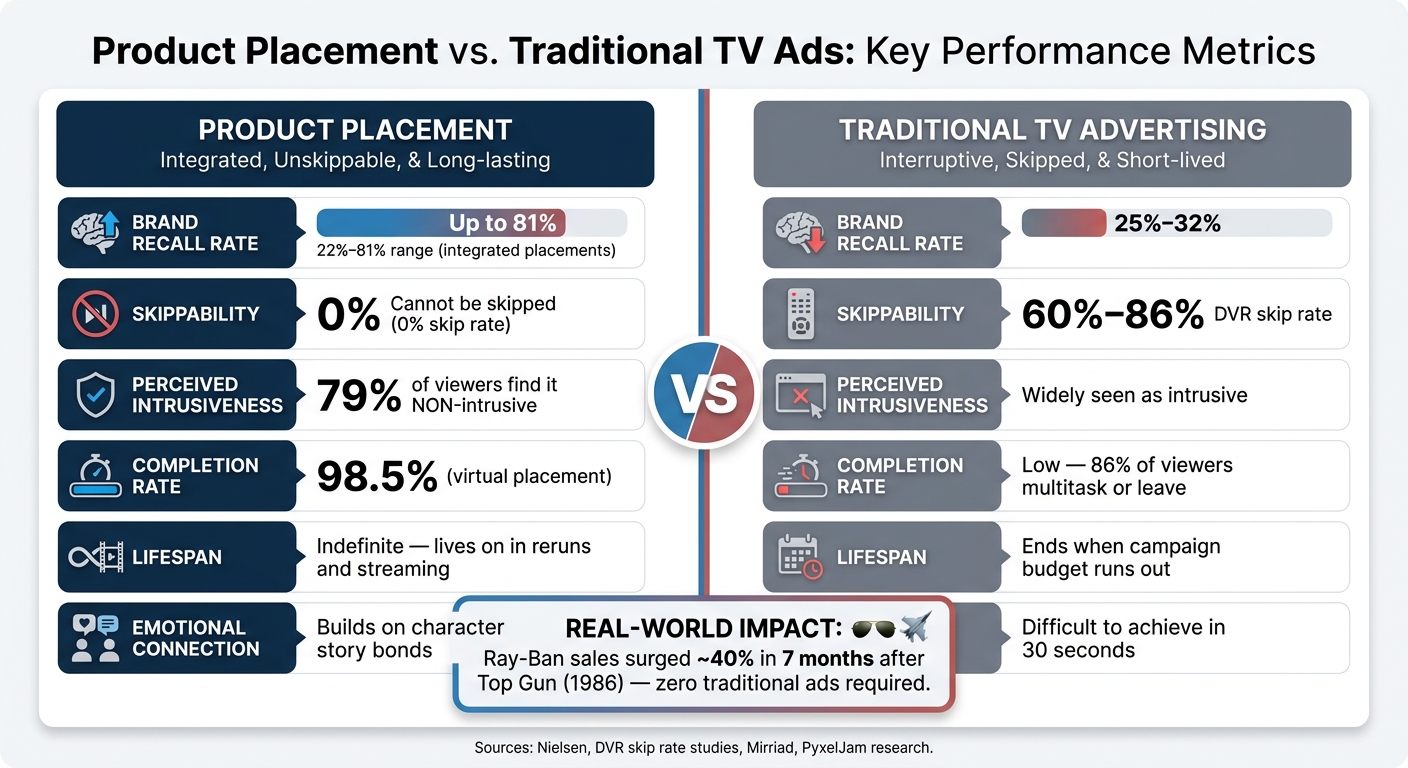
Product Placement vs. Traditional TV Ads: Key Performance Metrics
Traditional ads compete for attention, often feeling like interruptions. Product placement, on the other hand, works differently – it blends into the story, becoming part of the world viewers are already invested in. This seamless integration is powerful because it’s all about context. When a brand naturally fits into a narrative, it doesn’t feel like advertising. Instead, it feels authentic and connected to the viewer’s experience. Let’s dive into how emotional storytelling and psychological principles make product placement more impactful than traditional ads.
How Emotional Storytelling Shapes Brand Preference
Emotional storytelling turns casual exposure into trust and loyalty. When viewers form a bond with a character, they often extend that emotional connection to the products the character uses. A classic example? In 1986, Tom Cruise wore Ray-Ban Aviators throughout Top Gun, and sales of that style skyrocketed by nearly 40% in just seven months. The sunglasses weren’t pushed in a traditional ad – they were simply part of the character’s identity, making them aspirational.
This connection is what makes product placement so effective. The brand becomes part of the story, inheriting the emotional depth of the narrative. That kind of resonance is something no slogan or jingle can replicate.
The Psychology Behind Why Product Placement Works
Beyond emotional connections, product placement taps into key psychological effects that amplify its impact.
- The mere exposure effect builds familiarity and preference by subtly exposing viewers to a product repeatedly, creating a sense of comfort and trust through implicit memory.
- Narrative transportation, or being fully absorbed in a story, lowers cognitive defenses. This means viewers are less likely to resist or question the brand’s presence when it’s seamlessly woven into the plot.
These effects explain why product placements integrated into a storyline achieve an 81% brand recall rate, compared to just 32% for traditional TV ads. Traditional ads often trigger what’s called persuasion knowledge – a natural resistance to anything that feels like a sales pitch. By contrast, placements feel organic, bypassing that mental barrier.
"The future of advertising will be less about interruptions, and more about becoming part of the narrative." – Moe Nagle, Author, Cynopsis
Product Placement vs. Traditional Ads: A Side-by-Side Look
When it comes to brand loyalty, product placement consistently outperforms traditional ads across key metrics:
| Dimension | Product Placement | Traditional TV Advertising |
|---|---|---|
| Recall Rate | 22%–81% (depending on integration depth) | 25%–32% |
| Skippability | Cannot be skipped | 60%–86% DVR skip rate |
| Perceived Intrusiveness | 79% of viewers find it non-intrusive | Often seen as intrusive |
| Emotional Connection | Builds on character and story bonds | Difficult to achieve in 30 seconds |
| Lifespan | Indefinite – lives on in reruns and streaming | Ends when the campaign budget runs out |
| Completion Rate | 98.5% (virtual placement) | Low – 86% of viewers multitask or leave |
One standout advantage of product placement is its longevity. A placement made today can continue to generate impressions for years through streaming platforms and reruns – without requiring additional spending. Traditional ads, by contrast, vanish as soon as the budget runs dry.
These performance differences highlight why product placement is such a powerful tool for building brand loyalty. And with AI advancements, brands can now personalize placements even further, ensuring they resonate with specific audiences in smarter, more targeted ways.
Using AI to Build Data-Driven Product Placement Strategies
With AI, brands can turn product placement into a precise, data-driven approach that fosters long-term customer loyalty. While product placement itself is a proven tactic, the real challenge lies in determining the where, when, and for whom – and that’s where AI shines.
How AI Identifies Audience Preferences for Placement
AI goes beyond simply identifying who’s watching; it dives deep into how they watch. By analyzing viewing habits, browsing patterns, and demographic data, machine learning creates detailed audience profiles. These profiles help brands understand which product categories will resonate most with specific viewer groups.
AI also evaluates the emotional tone of scenes. By analyzing elements like facial expressions, voice inflections, and body language, it can gauge the mood of a scene. This ensures that products align with the tone – like avoiding a high-energy sports drink in a somber moment or a luxury item in a chaotic setting.
"Generative AI isn’t just a technology…It gives us a brand new way of engaging with the consumer." – Jonathan Heller, CEO, Firsthand
AI also identifies key engagement moments – those specific frames where viewer attention is at its peak. This is achieved through frame-by-frame metadata analysis, pinpointing the best opportunities for natural-feeling product placements. For example, tools like KERV have partnered with NBCUniversal to transform ordinary reality TV scenes into shoppable experiences using this method.
Finally, AI ensures that the product is visible in the scene without disrupting its natural flow, striking a balance between subtlety and prominence.
How AI Balances Placement Frequency and Visibility
Effective product placement is all about finding the sweet spot between being noticeable and blending seamlessly into the scene. AI plays a crucial role here by aligning the brand tone with the scene’s sentiment while optimizing the frequency and prominence of the placement.
Using scene segmentation, AI examines factors like camera angles, lighting, and composition. This helps determine whether a product should take center stage as a "hero" element or remain a subtle part of the background. Studies show that background placements lead to about 22% aided recall, while placements where characters actively use the product can boost recall to around 53%.
Dynamic Creative Optimization (DCO) further elevates this process by storing multiple versions of a placement and selecting the most relevant one for each viewer in real time. For instance, two people watching the same scene might see different brands, each tailored to their preferences. Additionally, AI-driven A/B testing helps marketers refine placement strategies by analyzing which styles generate the most engagement. This continuous feedback loop ensures a balance between visibility and subtlety.
AI Decision-Making Methods: A Reference Table
Here’s a quick look at how AI processes various data types to make smarter product placement decisions:
| Data Type | AI Processing Method | Placement Decision Outcome |
|---|---|---|
| Viewing History & Browsing | User profiling & machine learning modeling | Matches product categories to individual viewer preferences |
| Scene Metadata | Scene segmentation & camera analysis | Optimizes positioning, lighting, and depth for seamless integration |
| Emotional Cues | Emotional tone analysis | Aligns product tone with the scene’s mood (e.g., joy, suspense) |
| Watch-Time & Engagement | Frame-level metadata analysis | Identifies high-engagement frames ideal for product visibility or shoppable placements |
| Geographic Location | Geo-targeting via edge computing | Delivers region-specific product placements tailored to local audiences |
How AI Powers Personalized Product Placements at Scale
AI has revolutionized how personalized product placements are scaled across vast video libraries. The challenge isn’t just about implementing these placements but doing so consistently across dozens – or even hundreds – of videos without sacrificing quality or disrupting the story. That’s where AI-powered production truly shines.
AI-Generated Video for Scalable Scene Personalization
In traditional product placement, what’s filmed is final – once a product is in a scene, it’s there for good. AI changes this entirely. By using tools like 3D modeling, video compositing, and computer vision, companies like PyxelJam can seamlessly insert realistic digital products into completed footage, eliminating the need for reshoots.
This approach allows a single video to be transformed into multiple customized versions, making it possible to run campaigns across numerous video assets without creating separate productions for each one. The result? Faster turnarounds, reduced costs, and consistent visual quality.
"AI takes brand integration beyond mere visibility, creating an intricate tapestry of engagement and emotional resonance through virtual product placement." – Emily Oberkrieser, Director of Integrated Marketing, Mirriad
Next, let’s look at how AI fine-tunes these placements to connect with U.S. audiences specifically.
Localizing Placements for U.S. Audiences with AI
Audiences from different regions respond to different product versions, price points, and cultural references. AI tackles this complexity through geo-targeting, enabling tailored placements for specific regions. For U.S. viewers, this might mean showcasing a product variant that aligns with American preferences, displaying prices in USD, or weaving in local cultural elements that feel relatable.
This is especially advantageous for brands distributing content across global platforms. For instance, a viewer in Chicago and one in London might watch the same video but see entirely different product placements – each tailored to their market – without requiring any edits to the original footage. This localized strategy ensures that placements not only resonate but also feel natural.
Guidelines for Keeping Placements Story-First
For product placements to work seamlessly, they must serve the story rather than disrupt it. AI achieves this by analyzing dialogue, character interactions, and the overall scene context before deciding where and how to place a product.
Here are some practical guidelines to ensure placements enhance the narrative:
- The product should appear naturally within the scene’s setting. For example, a coffee brand makes sense on a kitchen counter, but not during a high-speed car chase.
- Timing matters. Products should align with the emotional tone of the scene. Avoid inserting a placement during a tense or emotional moment unless it fits the brand’s tone perfectly.
- Transparency is key. Disclosing AI-generated placements builds trust. A survey of 32 AI experts revealed that 84.4% believe such disclosure is necessary to maintain viewer confidence.
When placements feel like a natural part of the story, they’re more likely to leave a lasting impression on viewers. It’s not just an ethical choice – it’s a smart one.
How to Measure the Impact of AI-Driven Product Placements
Tracking the success of product placements goes beyond just gauging visibility. It’s about understanding how these placements influence everything from initial awareness to repeat purchases. AI not only helps position products effectively but also provides insights into their performance.
Key Metrics to Track Placement Performance
Begin by assessing exposure metrics like reach and impressions to understand how many people saw the placement and its overall visibility. But raw view counts only tell part of the story. The real value lies in metrics like engagement and loyalty.
One of the most reliable indicators of success is brand recall. Integrated placements often outperform traditional ads in this area. For instance, when brands are featured within TV shows, unaided recall rates reach 44%, compared to just 30% for standard TV commercials. A standout example is Heineken’s placement in Skyfall, which achieved a 60% unaided brand recall.
Other important metrics include purchase intent, sentiment analysis, and brand affinity – all of which should be measured before and after the campaign. AI tools excel at quantifying these signals. They can track social media mentions, hashtag activity, and even spikes in search volume. For example, when Oreo appeared in Avengers: Endgame in April 2019, AI detected a 60% increase in Google searches and a 25% jump in website traffic right after the movie’s release.
These short-term metrics pave the way for more in-depth AI-driven attribution, which measures the campaign’s lasting effects.
Using AI Attribution Models to Measure Long-Term Impact
Short-term metrics are valuable, but AI attribution models take it a step further by evaluating long-term results. While impressions show how many people saw the placement, attribution models determine its true impact. Lift analysis is a key approach here. By comparing the behavior of audiences exposed to the placement with a control group that wasn’t, AI can measure changes in website visits, store traffic, and actual sales.
Consider this example: In February 2025, a global consumer packaged goods (CPG) brand collaborated with Mirriad on an AI-powered virtual product placement (VPP) campaign. Using iSpot data and pixel tagging, the campaign achieved a 15.5x higher purchase value per household when VPP was combined with traditional TV ads. Additionally, it saw a +10 percentage point boost in both ad awareness and purchase intent among Black women aged 18–54, as verified by Kantar.
"As audiences increasingly shift to streaming while ignoring traditional ad formats, virtual product placement is proving to be the game-changing way to connect with audiences in far more meaningful ways that drive better business outcomes." – Stephan Beringer, CEO, Mirriad
Another tool, Placement Quality Scoring (PQS), evaluates factors like prominence, integration, and context, offering a better prediction of long-term brand affinity than simple impression counts.
Placement Types and Their Outcomes
Different product placement strategies yield different results depending on your objectives. Here’s a breakdown of the main types:
| Placement Type | Short-Term Metric | Long-Term Outcome |
|---|---|---|
| Standout (Narrative Integration) | High unaided recall, elevated search volume | $412,400 avg. Net Placement Value; strong brand affinity |
| Standard (Background Props) | Broad reach and impressions | Higher cumulative valuation when scaled across many placements |
| Character Usage | Purchase intent lift, social mentions | Emotional connection and lasting brand preference |
| VPP + Traditional TV | +10pp ad awareness | 15.5x higher purchase value per household |
| Interactive/Shoppable (AI-Driven) | Click-through rate, direct conversions | Immediate sales data and audience segmentation insights |
Standout placements, where products are seamlessly woven into the storyline, often deliver higher individual returns. On the other hand, standard background placements become more impactful when deployed at scale across multiple pieces of content. The best strategy depends on whether your goal is to create a deep connection with the audience or maximize reach and visibility.
Conclusion: Building Loyal Customers Through Product Placement with PyxelJam

Research confirms that product placement works because it earns attention, blending seamlessly into the story rather than interrupting it. When a product naturally fits into a scene – woven into a character’s actions or the narrative – it avoids the resistance people often feel toward traditional ads. In fact, integrated placements have been shown to achieve much higher recall rates than conventional advertising methods. The emotional connection created by these placements plays a key role in their effectiveness.
With advances in AI, brands can now scale this approach like never before. Instead of relying on a single, static placement, they can adapt, replace, or customize product integrations for different audiences and locations – all without the need for reshoots.
This is where PyxelJam’s AI video production platform comes in. It combines 4K cinematic quality with unmatched flexibility in post-production, allowing brands to maintain focus on storytelling while building deeper connections with viewers. The result? Brand associations that feel natural and earned, not forced.
"Product placement isn’t just about visibility, it’s about relevance, authenticity, and emotional resonance." – Alec Mann, Hollywood Branded
FAQs
How do I choose shows or creators that fit my brand?
When choosing creators to collaborate with, it’s not just about how many followers they have. What truly matters is who their audience is and how engaged they are. Take a closer look at their audience demographics, engagement rates, and the level of trust they’ve built with their viewers. A creator whose content style aligns with your target market will deliver placements that feel genuine and relatable.
To refine your strategy, leverage AI tools to experiment with how your product fits into various contexts. These tools can help you pinpoint the most effective narratives, visuals, and influencer profiles to achieve your goals.
How can AI personalize product placements without breaking the story?
AI makes product placements in videos feel organic by using advanced tools like computer vision and 3D modeling. It scans video frames to find ideal spots – like empty tables or walls – where products can fit naturally. To make the placement look real, it adjusts details like lighting, shadows, and angles for smooth integration.
Additionally, AI uses contextual analysis and natural language processing to match the product placement with the scene’s mood and dialogue. This ensures the product complements the storyline instead of standing out awkwardly.
What’s the best way to prove product placement drove sales?
To show that product placement leads to sales, you need a system that connects viewer engagement directly to purchases. Here’s how you can do it:
- Use tracking tools: Unique discount codes, custom UTM links, and dedicated landing pages are excellent ways to track performance. These tools let you see exactly where your sales are coming from.
- Leverage AI-powered analytics: Advanced analytics can help you monitor key metrics like click-through rates and conversions, giving you a clearer picture of what’s working.
- Run A/B tests: Testing different placements allows you to see which ones resonate best with your audience, helping you fine-tune your strategy for better results.
By combining these methods, you can gather actionable data to demonstrate the impact of your product placement efforts.